
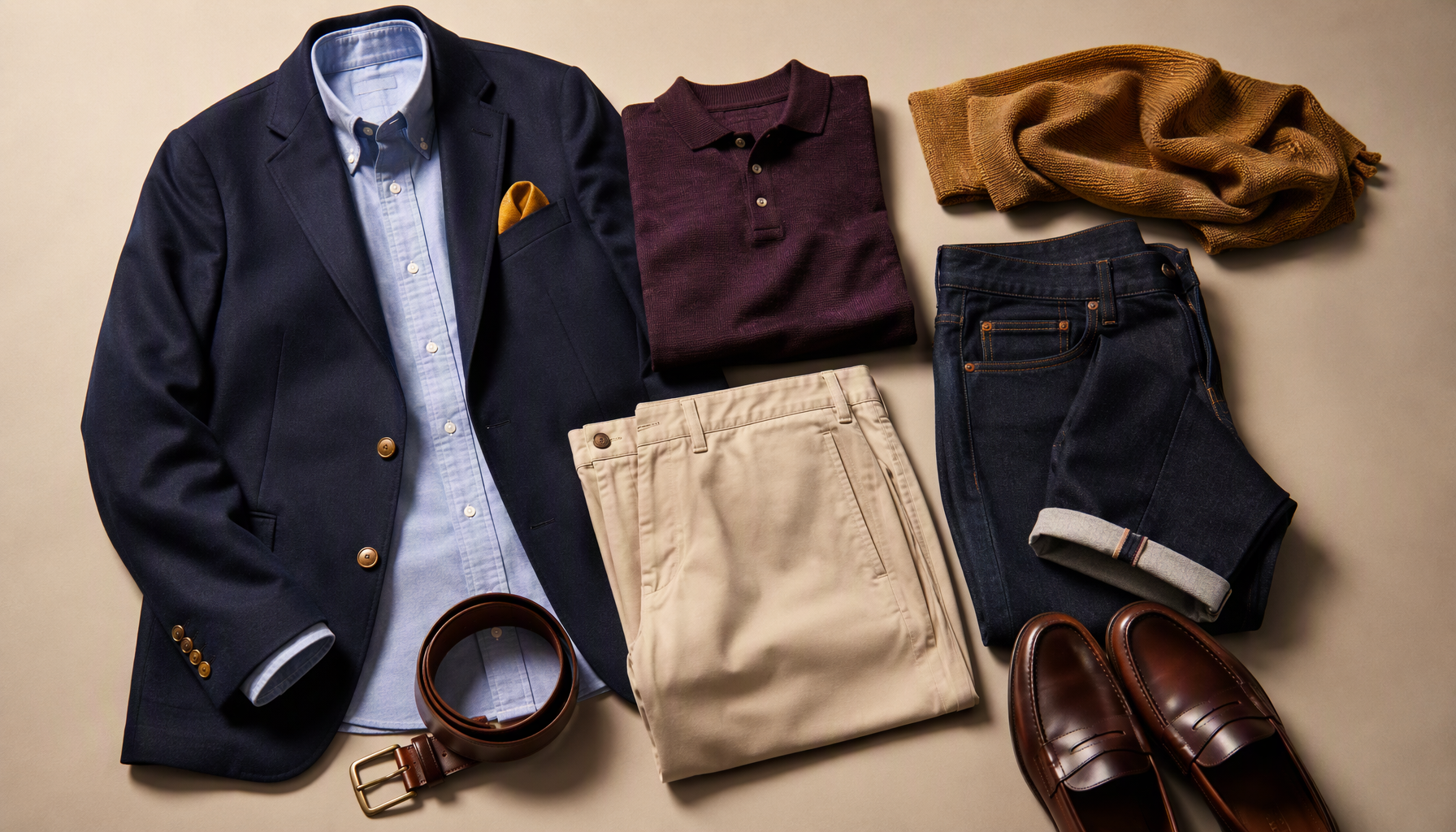
If you are building a men’s work-to-weekend wardrobe, begin with the situations you repeat each week, then choose pieces that can move between them without becoming costume-like.
Gear’s decision lens: The decision here is about outfit coverage, fit, care, climate, and repeat use rather than collecting isolated pieces that only work together once. Read how Gear researches guides and review the affiliate disclosure.
A men’s work-to-weekend capsule can include shirts, trousers, denim, knitwear, outerwear, shoes, and accessories. The useful question is how many reliable combinations each piece creates.
How to Build a Men’s Work-to-Weekend Wardrobe: Quick Decision Guide
Imagine You Are…
Your week includes office days, a commute, casual dinners, errands, and one less formal weekend plan. You want fewer clothes that create more combinations, but the office still needs a clear level of polish.
Start with the actual use case, then compare fit, maintenance, movement, and return risk. Start with the use case, then narrow the formality, fit, maintenance, and return risk.
Gear uses available evidence for this specific decision and identifies what remains uncertain. A men’s work-to-weekend wardrobe should be built around the actual office, commute, climate, laundry rhythm, and social week. The guide does not present marketplace information as direct product examination.
Decision Matrix
Last checked: October 4, 2026
Keyword demand can help prioritize a question, but it cannot prove fit, comfort, durability, or event suitability. Verify the live product and venue information before ordering.
Commercial boundary: This guide is informational and contains no affiliate product links. Commercial Gear comparison pages disclose relationships separately; this article focuses on the priority is a missing link that creates more complete outfits, not another isolated piece..
| Situation | Decision lane | Useful starting point | Watch-out |
|---|---|---|---|
| Office anchor | Reliable work base | Trousers, shirt, blouse, jacket, or polished knit | Check fit and repeat combinations |
| Transition layer | Work to weekend bridge | Overshirt, cardigan, blazer, or lightweight jacket | It must work with more than one base |
| Footwear | Formality and movement | Office shoe, loafer, boot, or clean sneaker where allowed | Walking and care matter |
| Weekend support | Relaxed but compatible | Denim, knit, casual shirt, or practical outerwear | Do not create a separate wardrobe island |

Choose the Path That Fits Your Situation
The formal-office dresser
Choose this path: Start with structured anchors and one flexible layer.
Watch-out: casual pieces may not cross the office boundary.
The hybrid worker
Choose this path: Prioritize pieces that work on camera, commute, and casual days.
Watch-out: comfort should not remove basic fit and polish.
The low-maintenance dresser
Choose this path: Choose easy-care fabrics and repeatable neutral combinations.
Watch-out: easy care still requires following the label.
Map the week before buying
List the dress codes, weather, commute, laundry rhythm, and social situations you actually repeat. A wardrobe for a formal office will differ from one for a creative workplace, hybrid schedule, trade role, or client-facing week.
Separate anchor pieces from support pieces. Trousers, shirts, jackets, knitwear, shoes, and outerwear need to work together. If a piece needs three purchases before it becomes wearable, it is not a simple starting point.
Build around neutral compatibility
Start with color and fabrics that combine without effort. This does not mean every item must be navy, grey, black, white, or beige, but your anchor pieces should not create a new matching problem.
Texture and proportion add interest. A knit layer, overshirt, textured trouser, or polished sneaker can shift the same base between work and weekend when the fit and setting allow it.
Use fit and care as filters
A piece earns repeat wear when it fits through sitting, walking, reaching, and layering. Compare garment measurements with an item you own and check whether the care routine fits your week.
Dry cleaning, steaming, polishing, delicate washing, and storage all count. A lower-priced piece with high care debt may be less useful than a simpler garment you can maintain consistently.
Buy the missing link
Before adding another shirt or pair of trousers, identify the missing link that prevents outfits from working. It may be a layer, shoe, belt, outerwear piece, or practical bag.
This approach reduces impulse buying. The goal is not a small wardrobe for its own sake; it is a wardrobe where each new piece solves a visible gap.
Before You Commit
- List your real weekly situations and dress codes.
- Identify anchor pieces and missing links.
- Compare fit with garments you already own.
- Estimate care, storage, and replacement demands.
- Buy the piece that creates more complete outfits.
The priority is a missing link that creates more complete outfits, not another isolated piece. The most useful final check is the one that prevents the likely failure in this situation, whether that is wrong formality, poor movement, missing weather protection, unclear fit, or unnecessary care.
Frequently Asked Questions
How many pieces do I need for a work-to-weekend wardrobe?
There is no universal number. Start with the situations you repeat and choose pieces that create several reliable combinations.
What color are best for a men’s capsule wardrobe?
Use compatible anchor color that fit your workplace and existing wardrobe, then add interest through texture, proportion, or one controlled accent.
Should work and weekend clothes be separate?
Some pieces need separate formality, but layers, shoes, trousers, shirts, and outerwear can often bridge the two settings.
How do I avoid buying clothes that do not work together?
Map combinations before buying and identify the missing link rather than purchasing another isolated item.
Does Gear physically test men’s clothing?
No. Gear explains available specifications, fit evidence, care, and practical tradeoffs.
More Gear Decision Guides
- Match the guide to the actual occasion, routine, or wardrobe gap.
- Check fit, care, weather, movement, and return risk before ordering.
- Use the mens style buying guides hub for related guides.