
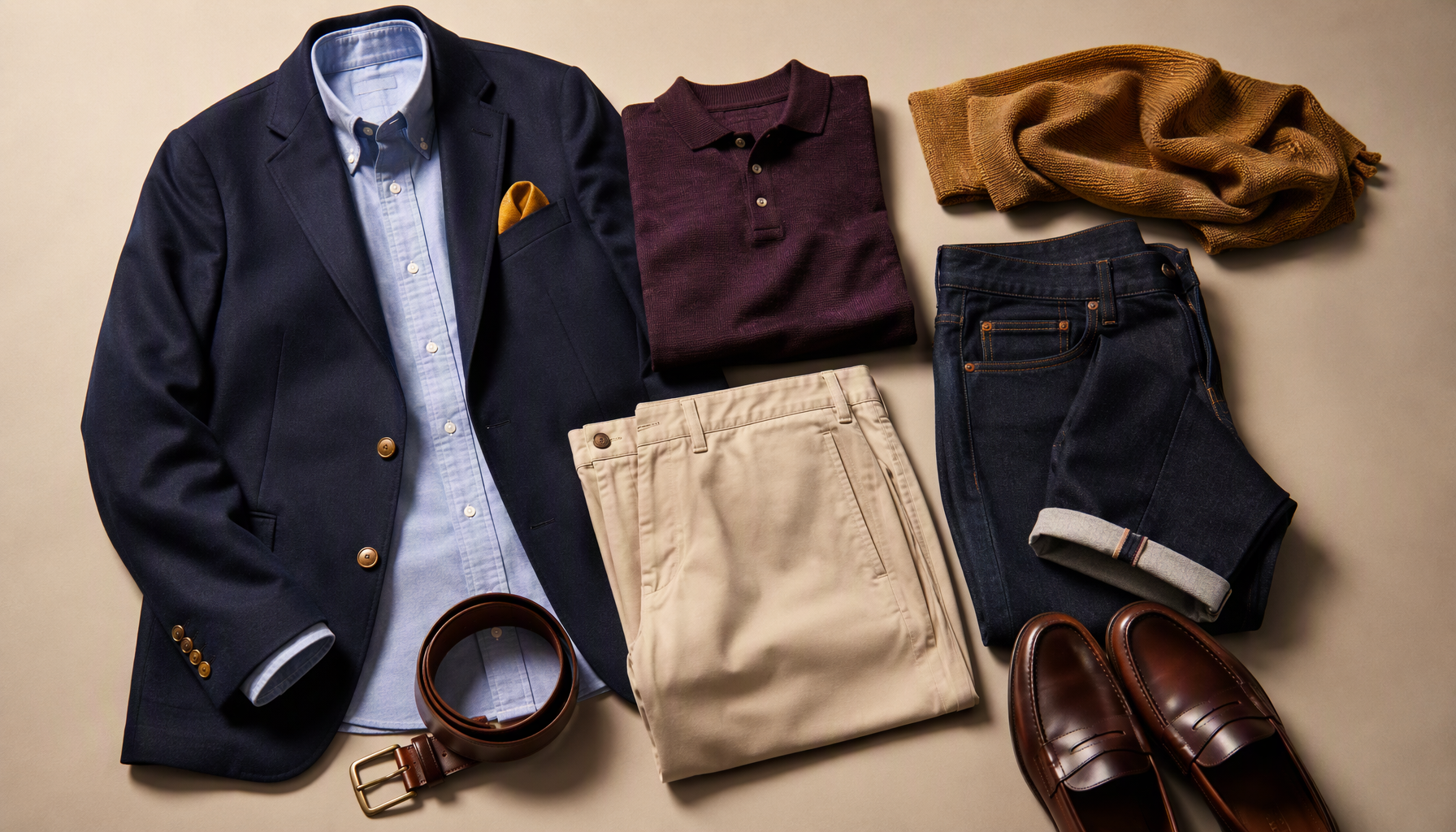
If you are deciding what to wear to a job interview as a man, start with the invitation, venue, role, weather, movement, and the fit or comfort details this audience needs to manage.
Gear’s decision lens: The decision here is about looking prepared without wearing a costume. Use the role, industry, format, commute, and your own comfort as the brief. Read how Gear researches guides and review the affiliate disclosure.
Interview outfits vary between corporate, creative, retail, healthcare, trade, remote, and casual workplaces. A useful interview clothing guide explains how to read context instead of declaring one universal uniform.
Men’s Fit, Shoes, and Layer Checks
Use the invitation and venue first, then inspect shoulder placement, chest ease, sleeve length, collar, rise, waistband, inseam, trouser break, toe room, heel security, and how the jacket or layer behaves when you sit and walk.
- Do not treat slim, regular, relaxed, comfortable, or versatile as measurements.
- Match shoe formality and ground to the event, commute, weather, and break-in time.
- Check the full outfit without the jacket or outer layer before committing.
- Verify current garment measurements, care, variant, and return terms.
What to Wear to a Job Interview: Quick Decision Guide
Imagine You Are…
You have an interview at a company whose website looks polished but whose staff photos show a relaxed workplace. The interview is in person, the commute includes walking, and you want to appear prepared without feeling unlike yourself.
Start with the actual use case, then compare fit, maintenance, movement, and return risk. Start with the use case, then narrow the formality, fit, maintenance, and return risk.
Gear uses available evidence and explains what remains uncertain. This guide is not a universal rulebook, and it does not present marketplace information as direct product examination.
Decision Matrix
Last checked: October 4, 2026
Keyword demand can help prioritize a question, but it cannot prove fit, comfort, durability, or event suitability. Verify the live product and venue information before ordering.
Commercial boundary: This educational guide contains no affiliate product links. Commercial Gear comparison pages disclose relationships separately.
| Situation | Decision lane | Useful starting point | Watch-out |
|---|---|---|---|
| Corporate or client-facing | Higher structure | Tailored, restrained, polished, comfortable | Avoid confusing formality with confidence |
| Creative or startup | Clean flexibility | Intentional separates with one personal detail | Do not let the statement piece dominate |
| Retail, healthcare, or service | Practical presentation | Neat, mobile, appropriate coverage, sensible shoes | Check movement and workplace safety |
| Video interview | Upper-frame clarity | Clear neckline, controlled color, good fit | Test lighting and camera framing before the call |

Choose the Path That Fits Your Situation
The corporate candidate
Choose this path: Use a structured but familiar outfit with restrained accessories.
Watch-out: an unfamiliar suit or shoe can create avoidable discomfort.
The creative candidate
Choose this path: Use a clean base with one considered personal detail.
Watch-out: avoid making the detail the entire message.
The remote candidate
Choose this path: Prepare the visible upper half and test the camera frame.
Watch-out: check the whole outfit in case you need to stand or move.
Read the workplace signal
Industry, role, customer contact, and workplace formality matter. Corporate or client-facing roles may call for more structure, while creative, retail, startup, or trade environments may reward clean, practical polish rather than formal businesswear.
When the signal is unclear, choose a neat, adaptable base and let one layer or accessory establish formality. The aim is to look deliberate and comfortable, not to make the clothing the most memorable part of the interview.
Choose reliable fit and movement
An interview outfit should allow you to sit, reach, walk, and enter the room without constant adjustment. Measure a familiar garment or use a current size chart instead of trusting a label or model photo.
Fit uncertainty can distract you before the conversation begins. Try the full outfit in advance, including shoes, jacket, bag, and any layer. Check that hems, sleeves, waistbands, and necklines behave when you move.
Account for format and commute
Video interviews need a clear neckline, appropriate upper half, and a background-friendly color. In-person interviews add shoes, outerwear, transport, weather, and arrival timing.
Plan what you will do with a coat or bag when you arrive. A practical interview outfit includes the route to the room and the waiting period, not only the final camera frame or chair.
Avoid last-minute experimentation
Do not make the interview the first time you wear a new shoe, fabric, hairstyle, fragrance, or fit. Familiarity reduces distraction and makes it easier to focus on the conversation.
Check care, wrinkles, transparency, noise, pockets, and storage. A clean, prepared outfit built from pieces you understand can be stronger than an expensive item whose limitations are unknown.
Before You Commit
- Research the workplace and role formality.
- Choose a familiar outfit that allows movement.
- Test the complete outfit before interview day.
- Plan shoes, outerwear, bag, commute, and weather.
- Check care, wrinkles, transparency, and camera framing.
Do not give every criterion equal weight. The right priority is the one that prevents the most likely failure in your actual situation.
Frequently Asked Questions
What is the safest interview outfit?
A clean, comfortable, role-appropriate outfit with reliable fit and restrained styling is usually safer than a highly formal or trend-led option.
Should I wear a suit to every interview?
No. The role, industry, company, format, and workplace signal should guide the level of structure.
What should I wear to a video interview?
Prioritize the visible upper half, clear fit, controlled color, and a background-friendly look, then test the camera and lighting.
Can I wear fragrance to an interview?
Keep fragrance subtle or skip it when you do not know the setting. The goal is a comfortable, respectful environment.
Does Gear test interview clothing?
No. Gear explains available evidence and use-case tradeoffs rather than presenting direct garment examination.
More Gear Decision Guides
- Match the guide to the actual occasion, routine, or wardrobe gap.
- Check fit, care, weather, movement, and return risk before ordering.
- Use the special occasion dressing hub for related guides.
Continue Through the Men’s Occasion Dressing Hub
Return to the men’s occasion dressing hub for the full occasion collection, then continue with wedding or cocktail or semi-formal event. The neutral special occasion hub explains the wider event and dress-code system.