
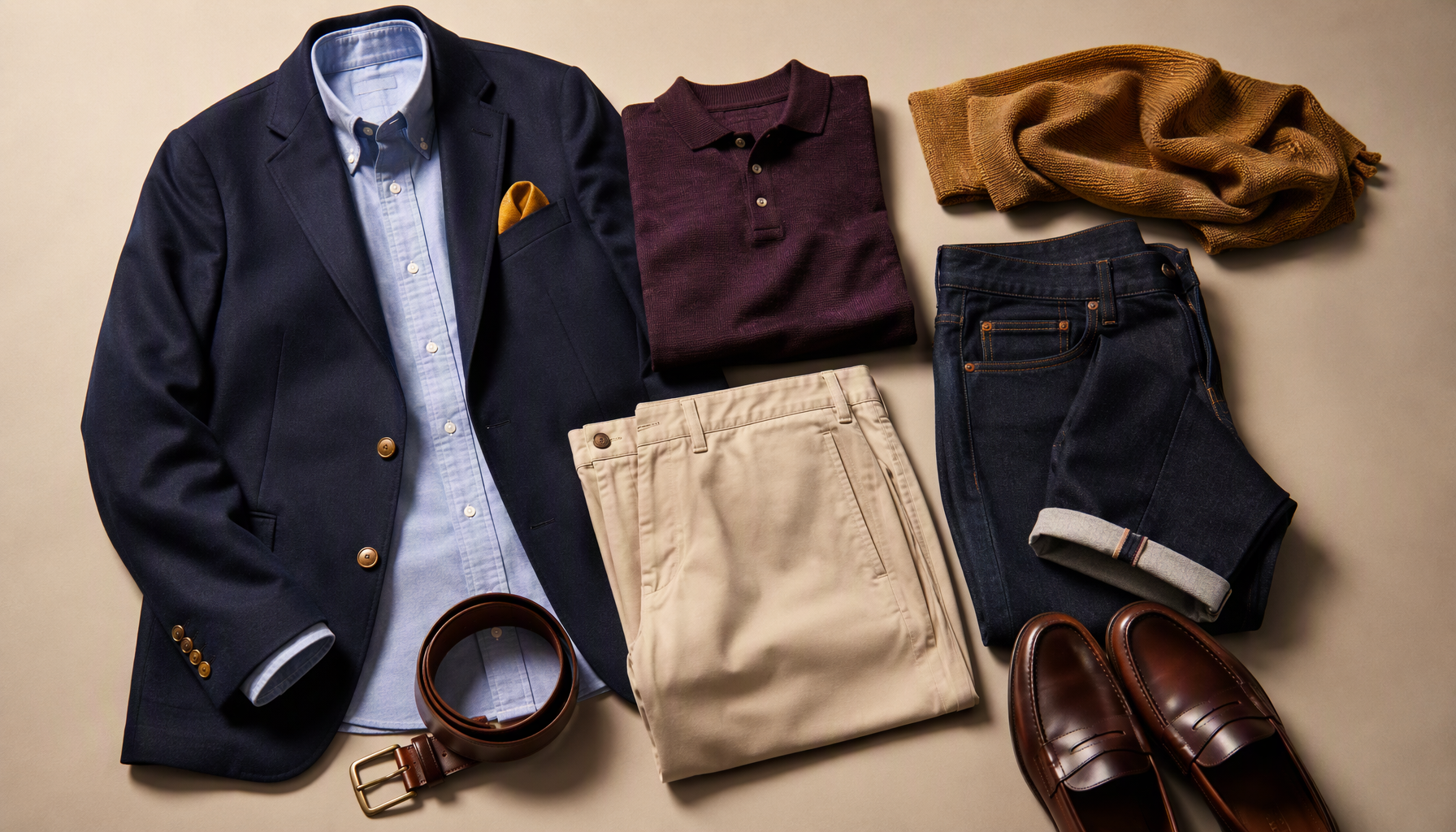
Gear men’s style
Build a wardrobe that earns its place.
Men’s style guides for work, weekends, travel, occasions, grooming, fit, and the practical decisions that make a smaller wardrobe more useful.
Build around real use
Start with the role, not the trend.
Occasion and professional dressing
Dress for the invitation and the day around it.
Business casual
Separate office formality from comfort, climate, commute, and repeat wear. Read the business-casual guide (coming next).
Wedding guest
Use dress code, venue, season, role, and color guidance to avoid overdressing. Read the wedding guide (coming next).
Dress shoes
Compare formality, walking, care, break-in risk, and outfit compatibility. Read the shoe guide (coming next).
Seasonal jackets
Choose outerwear by weather protection, layering, storage, and everyday use. Read the jacket guide (coming next).
Grooming
Build a simple routine around time, skin or hair needs, travel, and maintenance.
Capsule wardrobe
Use outfit combinations and care demands to avoid buying isolated pieces. Read the wardrobe guide (coming next).
The fit questions matter
Labels are not measurements.
Men’s wardrobe decision map
Choose the problem before the product.
Work and business casual
Choose shirts, trousers, shoes, jackets, and layers by workplace, client contact, commute, climate, and care.
Occasions
Decode wedding, interview, dinner, graduation, holiday, and formal-event dressing without copying a one-size-fits-all uniform.
Travel
Build repeatable combinations around walking, weather, luggage space, laundry, and the actual itinerary.
Fit and sizing
Compare shoulder, chest, sleeve, rise, waist, inseam, leg opening, width, and garment ease across brands.
Footwear
Choose Oxford, derby, loafer, boot, or sneaker by formality, ground, break-in, walking, care, and outfit role.
Underwear and base layers
Consider rise, waistband, support, pouch or coverage, seams, moisture, movement, care, and hygiene returns.
Marcus’s fit standard
Labels are not measurements.
Men’s style guides should explain what the reader can see and feel: shoulder placement, chest ease, sleeve length, collar, rise, waistband, inseam, trouser break, toe room, heel security, layering, and movement. “Slim,” “regular,” “relaxed,” “comfortable,” and “versatile” are starting clues, not evidence.
Every recommendation should also explain what the reader should not buy if the fit, workplace, climate, care routine, or return path does not match the intended use.
Useful before it is commercial
Gear separates men’s style decisions from product hype. We use available specifications, public listing information, and practical tradeoffs. We do not claim direct product examination when the evidence comes from supplied listings.
Continue exploring: buying guides | about