
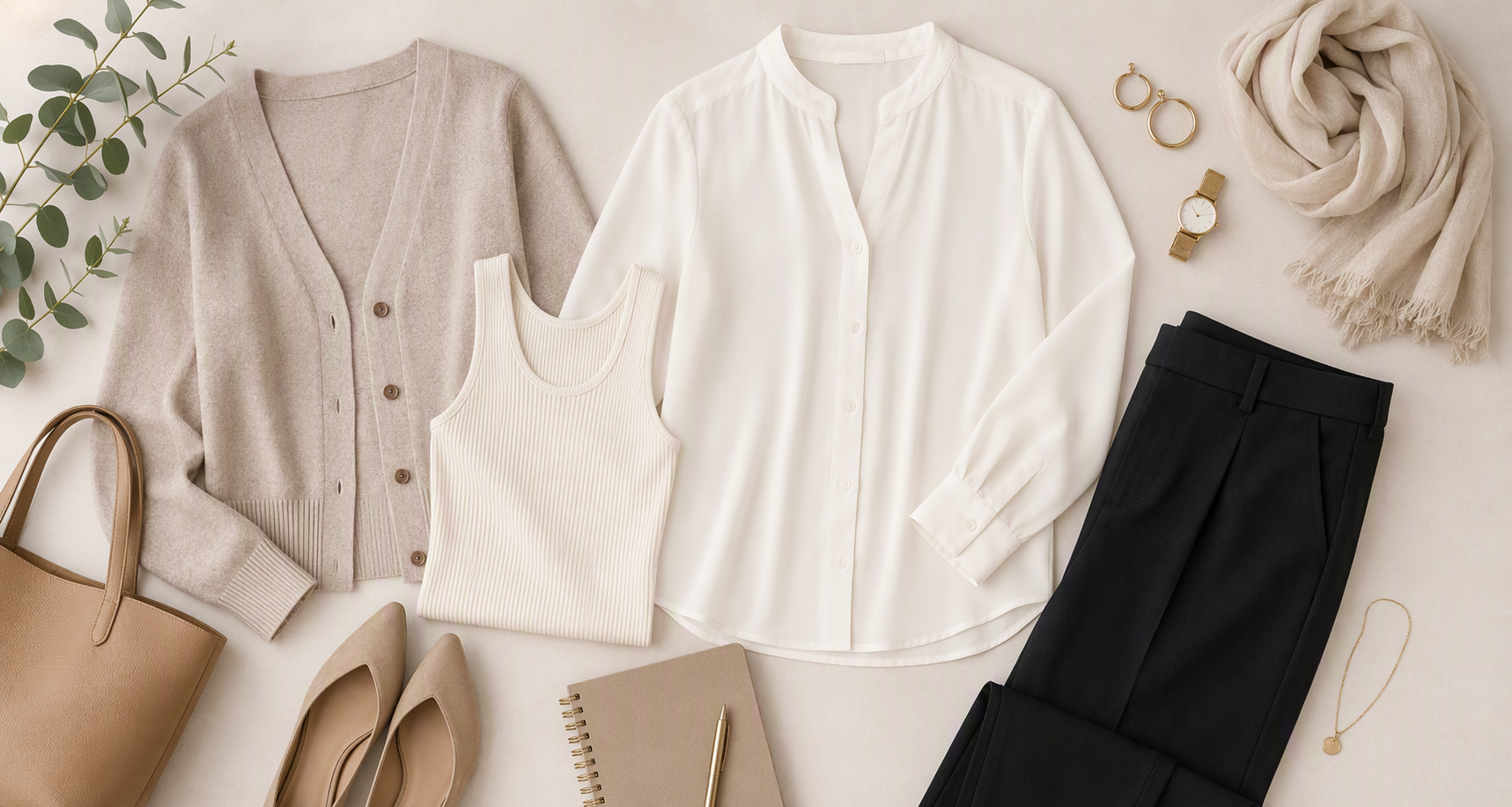
If you are buying work clothes online, start with fit evidence, fabric, care, outfit flexibility, workplace expectations, and return risk rather than the product photo alone.
Gear’s decision lens: The decision here is about measurements, fabric, opacity, movement, layering, care, and whether the item works across a real week. Read how Gear researches guides and review the affiliate disclosure.
Work clothes online can look simple to compare, but a business-casual blouse, office trousers, cardigan, and dress solve different fit and care problems. Start with the job the garment needs to do before narrowing the style.
What to Check Before Buying Work Clothes Online
Imagine You Are…
Leaving for work after a quick wardrobe change, sitting through a meeting, walking outside, and then going straight to a casual plan. The garment has to look appropriate, move comfortably, survive the commute, and work with the shoes and layers you already own.
That is why a model photo is only the beginning. The important details are often the size chart, fabric, opacity, sleeve or trouser length, care label, and return route.
Workwear search language is broad, but the reader’s decision is specific: fit, coverage, fabric, care, movement, workplace, and return risk. Those details matter more than repeating a broad phrase through a thin product list.
Work Clothes Compared at a Glance
Use the table as a screening tool, not as a universal ranking. The best workwear choice depends on your workplace, movement, climate, existing wardrobe, laundry routine, and tolerance for fit risk.
Last checked: October 4, 2026
Keyword volume shows demand, not garment quality. This guide uses available product and category evidence; it does not present direct garment examination or a promise of fit.
Commercial boundary: This educational guide contains no affiliate product links. Product-specific Gear pages disclose commercial relationships separately.
| Workwear factor | Look for | Potential tradeoff | Question to ask |
|---|---|---|---|
| Fit | Measurements, stretch, length, and model information. | A close fit may look polished but reduce movement. | Can you sit, walk, reach, and layer? |
| Fabric | Weight, opacity, breathability, wrinkling, and care. | Easy-care fabric may feel less soft or breathable. | Will the fabric suit the climate and commute? |
| Layering | Neckline, sleeve, armhole, rise, and jacket compatibility. | A statement shape may work with fewer existing pieces. | Which three items can it work with? |
| Return risk | Seller, variant, return cost, and exchange rules. | A low price is not useful if fit errors are expensive. | Can you return the exact item if it fails? |
Match the Garment to the Office and Routine
Work clothes are not interchangeable. A conventional office dresser may need a straightforward long-sleeve blouse. A commuter may prefer a fabric that tolerates movement and layering. A person moving from work to dinner may prioritize a more polished shape, while someone building a capsule wardrobe may need the broadest number of outfits from one piece.
Four practical buyer profiles
| Buyer profile | Starting point | Why it fits | Watch-out |
|---|---|---|---|
| The conventional office dresser | Business-casual blouse or trouser with clear measurements. | A straightforward silhouette usually creates more outfit options. | Confirm fabric, season, and exact fit before buying. |
| The work-to-weekend commuter | A transitional top or layer with practical coverage. | It can move from work into less formal plans without a complete change. | Neckline and sleeve length may not suit every workplace. |
| The after-work dinner dresser | A polished button-down, blouse, or dress with care guidance. | A dressier finish can work across office-to-evening settings. | Shine, opacity, or special care may reduce office practicality. |
| The outfit builder who layers | A cardigan, camisole, jacket, or base layer chosen around existing pieces. | Layering can extend a smaller wardrobe through changing temperatures. | Cropped or narrow coverage changes what can be worn underneath. |
Rule of thumb: Choose the garment’s role first: base, statement, or layer. Compare color and styling only after the role works for your week.
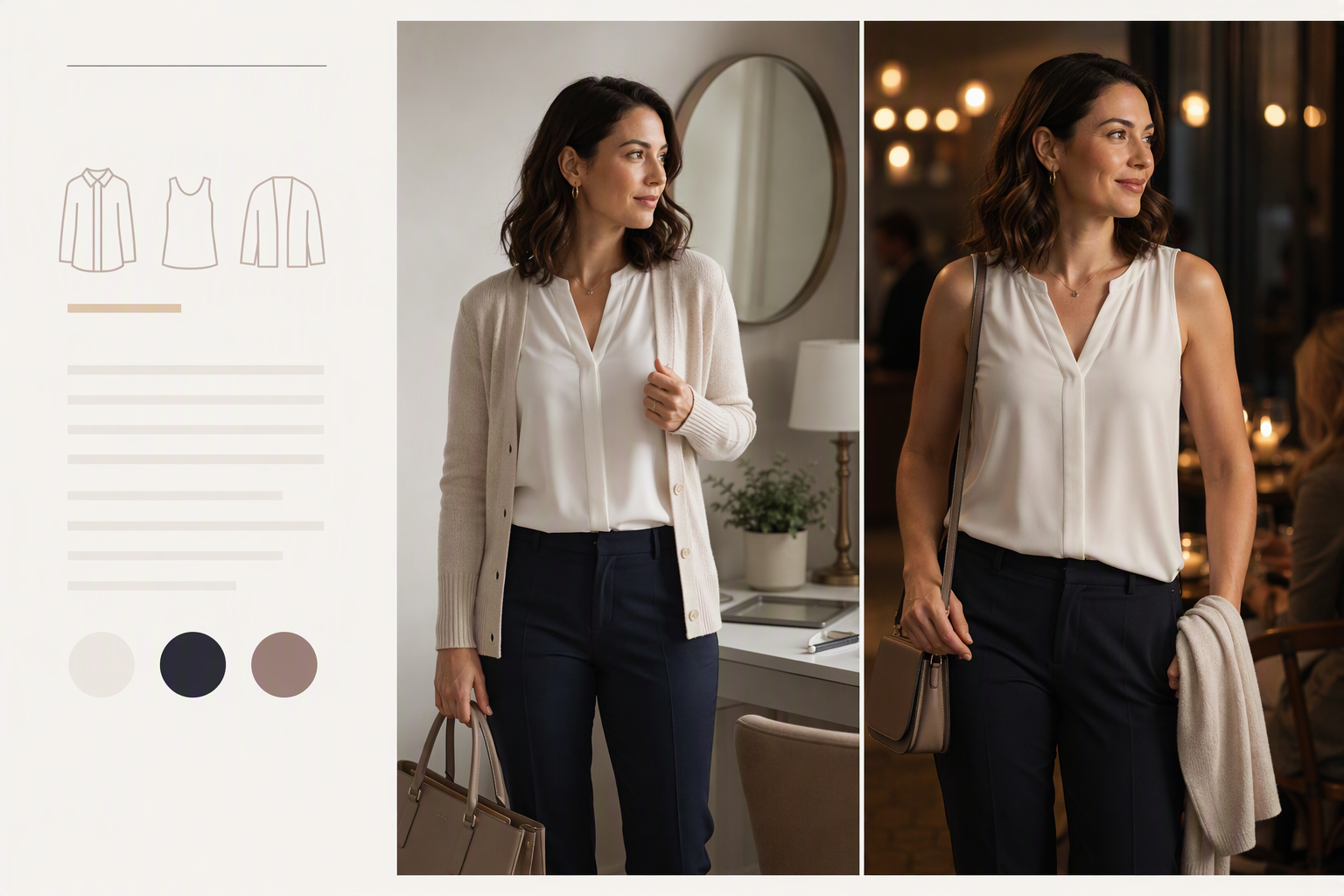
Use a Two-Pass Workwear Review
Pass one: remove obvious risk
Remove items with no usable size chart, missing fabric or care information, an unclear seller, or a return route that does not suit your schedule. Do not spend time comparing color if the basic fit evidence is absent.
Pass two: test the wardrobe logic
Ask whether the garment works with three items you already own. A blouse may need a jacket, trousers may need a specific shoe, and a cardigan may only work with one neckline. The best purchase often creates several reliable outfits rather than one impressive image.
Plan for the day after delivery
Compare the item with the listing before removing tags or washing it. Check seams, opacity, closures, length, and whether the exact variant matches your order. Try it with the shoes and layers you expected to use, and keep packaging until you are confident about fit and return eligibility.
Care is part of the purchase decision. Follow the current care label, avoid assuming that a fabric is machine washable because another version was, and store structured pieces so they do not lose their shape. The goal is to understand the routine required before deciding the price is worthwhile.
What to Check Before Ordering
- Measure a garment that already fits. Compare bust, waist, shoulder, rise, inseam, length, or sleeve measurements where the seller provides them.
- Check fabric, lining, opacity, and stretch. These details affect comfort, layering, washing, wrinkling, and whether the garment works in your climate.
- Review neckline, sleeve, rise, and coverage. A model image can make a shape look more conservative or more relaxed than it feels in your workplace.
- Confirm the exact seller and variant. color, size, bundle, and marketplace seller details may change the return route.
- Read the return terms before purchase. A short return window may be difficult if you are away, working long shifts, or waiting for a matching piece.
Keep the order confirmation and variant details together until the garment has passed your fit, outfit, and care checks.
Three Workwear Formulas to Use Before Ordering
Workwear becomes easier to buy when the reader can see the complete outfit rather than only the garment. Use these formulas as starting points, then adjust for workplace, climate, body, budget, and existing wardrobe.
| Workday | Garment formula | Fit and fabric check | Layer or shoe decision |
|---|---|---|---|
| Conventional office | Long-sleeve blouse or shirt, tailored trouser, closed shoe, structured layer. | Shoulder, bust or chest ease, opacity, sleeve movement, care. | Blazer or cardigan should close without pulling. |
| Work to dinner | 3/4 sleeve or polished button-down, wide-leg trouser, refined flat or loafer. | Neckline depth, underlayer, fabric shine, waistband, sitting comfort. | Use one accessory or layer to shift the formality. |
| Hybrid commute | Opaque base, stretch trouser, light jacket, comfortable shoe. | Wrinkle behavior, breathability, movement, and wash routine. | Choose a shoe that can handle the actual walking route. |
Fit Checks by Garment Type
Blouses and shirts
Check shoulder placement, bust ease, armhole, sleeve length, neckline, button spacing, and hem movement. A blouse should still look intentional when you reach, sit, or wear the jacket and bra or camisole planned underneath.
Trousers and skirts
Check rise, waistband stability, hip and thigh room, inseam or hem, lining, and the shoe you intend to wear. A labeled size is not enough when the item has stretch, a wide leg, a cropped hem, or a structured waistband.
Dresses and one-piece outfits
Check bust, waist, length, lining, transparency, fastening, and whether the garment can be layered. A dress that needs a special bra, heel, jacket, or care routine may be less versatile than the photo suggests.
Opacity, Underlayers, and Care
Opacity is a daylight and movement question, not only a product-photo question. Check whether white, pale, satin, thin knit, or fitted fabric needs a camisole, slip, bra, or additional layer. The underlayer should be part of the outfit formula, not an emergency fix after delivery.
Fabric composition and care determine whether a work item can repeat through the week. Check washing, drying, ironing, steaming, pilling, wrinkling, and storage. A garment that looks polished but requires a care routine the reader will not maintain is not a practical workwear choice.
Frequently Asked Questions
What is the most important check before buying work clothes online?
Fit information comes first. Compare measurements with a garment you already own, then check fabric, care, layering, and return terms.
Can I trust a model photo to choose my size?
No. A model photo helps show styling but cannot replace the seller’s measurements, size chart, fabric information, and return policy.
How should work clothes fit?
The answer depends on your workplace, movement, comfort preference, and the item. Check whether you can sit, walk, layer, and complete a normal day without constant adjustment.
What makes an online workwear purchase risky?
Unclear measurements, missing fabric information, limited return options, variant differences, and reviews that discuss delivery without explaining fit or construction.
Does Gear directly examine each garment?
Gear uses available product evidence and explains what remains uncertain rather than presenting marketplace details as direct garment examination.
Work Clothes Online Checklist
- Compare measurements with a garment you own.
- Review fabric, care, opacity, stretch, and layering.
- Match the garment to your workplace and commute.
- Confirm the exact variant, seller, and return terms.
Use the Gear buying-guide hub for related work, travel, beauty, family, and home decisions.