
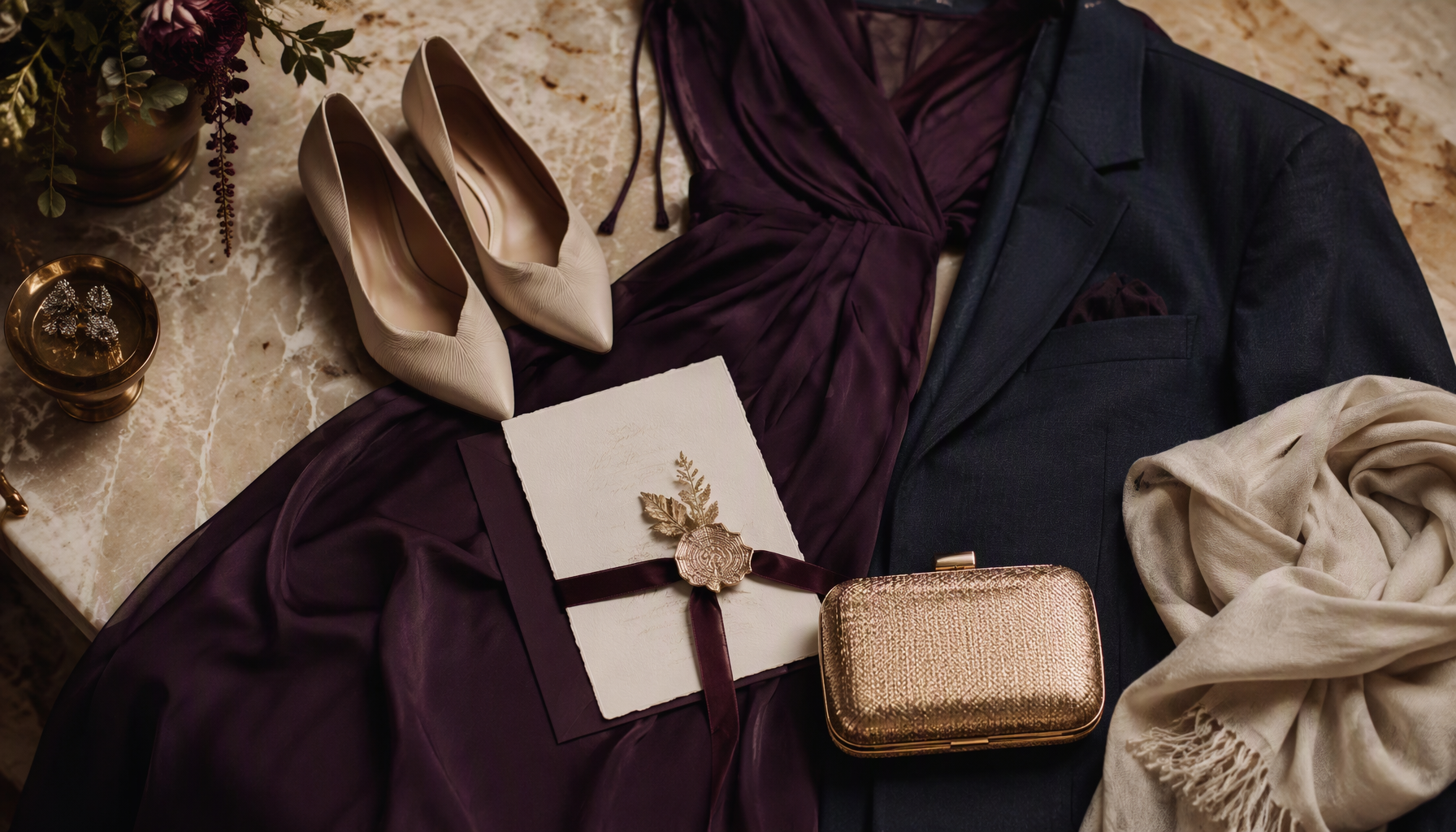
Gear women’s style
Dress for the occasion, not the guesswork.
Women’s occasion guides for weddings, interviews, garden parties, dinners and holiday events, built around dress code, fit, movement, weather and return risk.
Choose an occasion guide
Pick the single event you are dressing for.
Wedding guest
Wedding-guest outfit by dress code, fit, movement and weather.
Cocktail vs semi-formal
Decode the two most confused women’s dress codes.
Garden party
Garden-party dressing for uneven ground, heat and layering.
Job interview
Interview dressing by sector, with coverage and comfort checks.
First-date dinner
First-date outfits you can sit, travel and relax in.
Holiday party
Holiday-party dressing for heat, photos and venue formality.
How to use this hub
Read the invitation, then decide.
Dress-code decoder
The host’s wording is the strongest signal.
| Dress code | What it usually means | What to watch |
|---|---|---|
| Cocktail | Elevated dress or tailored separates, polished shoes | Often confused with semi-formal — follow the host’s word, not a generic chart |
| Semi-formal | A step below cocktail; a refined dress or dressy separates | Can read dressy or casual depending on venue; ask if unclear |
| Formal / black tie | Floor-length or formal gown, formal footwear | Don’t compete with the wedding party or hosts |
| Smart casual | Neat, put-together separates; clean shoes | Avoid workout wear, torn denim and beach footwear |
| Garden / daytime | Breathable fabric, movement-friendly hem, stable shoes | Uneven ground, long standing, sun and layers |
The fit questions matter
Labels are not measurements.
A well-fitting outfit in the middle of the formality range beats an ill-fitting one at the top. Check shoulder and bust placement, waist and rise, hem length, sleeve length and the footwear you will actually wear before comparing products. Build the outfit from what you already own where possible, then add only what the occasion genuinely requires.
Every guide also explains what not to buy when the fit, venue, climate, care routine or return path does not match the occasion. A dress that photographs well but restricts movement, or heels that fail on uneven ground, is a worse decision than a simpler outfit that works all day.
What every occasion guide checks
Useful before it is commercial.
Each guide answers the same four questions: what should I wear for this setting, what could go wrong, how can I adapt it to my body, budget and climate, and what should I verify before ordering the exact variant. Those four questions keep the advice practical instead of turning a dress code into an abstract lecture.
The guides are written audience-first. Women’s guides do not borrow men’s or children’s formulas, because fit, coverage and movement needs differ. Where a code is ambiguous, each guide aims for the middle of the formality range and prioritises comfort and venue conditions over a strict rule.
Return-risk checklist
Run this before you order.
- Measure your bust, waist and hip, and compare them to this exact garment’s chart — not your usual size label.
- Check fabric, opacity and lining for the venue’s lighting and the season.
- Confirm the return window and whether sale or altered items are excluded.
- Check the shoes against the actual ground and the length of the event.
- Plan a layer for air-conditioned indoor venues and outdoor temperature changes.
- Re-read the invitation for a colour request, theme or guest-role note you may have missed.
Frequently Asked Questions
Use the guide that matches the event.
Should I read the occasion guide or use the calculator first?
Read the occasion guide when the event is the immediate decision. Use the Wardrobe Gap Calculator when the bigger question is whether the existing rotation supports the event, workweek, or travel plan.
Do I need a new outfit for every occasion?
No. Start with the dress code and what you already own. A new purchase is useful when it solves a fit, coverage, weather, movement, care, or genuine rotation gap.
What should I do when the invitation is unclear?
Use the middle of the likely formality range, check the venue and time of day, and choose an outfit that can adapt through shoes, layers, and accessories without relying on a last-minute purchase.
Useful before it is commercial
Gear occasion guides are written from fit, formality, comfort and return-risk evidence rather than payment. Recommendations describe what a reader can see and feel — shoulder placement, waist definition, hem length, sleeve, footwear break and movement — not vague labels like “flattering” or “versatile.”
Continue exploring: buying guides | about